Solutions
The Problem
PD is a progressive and incurable neurological disorder that causes bradykinesia, muscle stiffness, and a myriad of other debilitating symptoms. It is typically diagnosed in individuals aged 55 and older, and the incidence increases with age. However, the onset of PD can occur several years before one starts to develop symptoms and techniques for early diagnosis are limited. Current diagnostic techniques include non-invasive neuro-imaging, observation of pre-motor symptoms such as rapid eye movement (REM) sleep behaviour disorder or impaired olfaction, and searching for bio-markers within bodily fluids or tissues. However, these techniques are expensive, invasive, or only effective after significant progression of the disease
Our Project
The goal of our project is to develop an inexpensive, non-invasive and user-friendly device capable of accurately diagnosing early-onset PD.
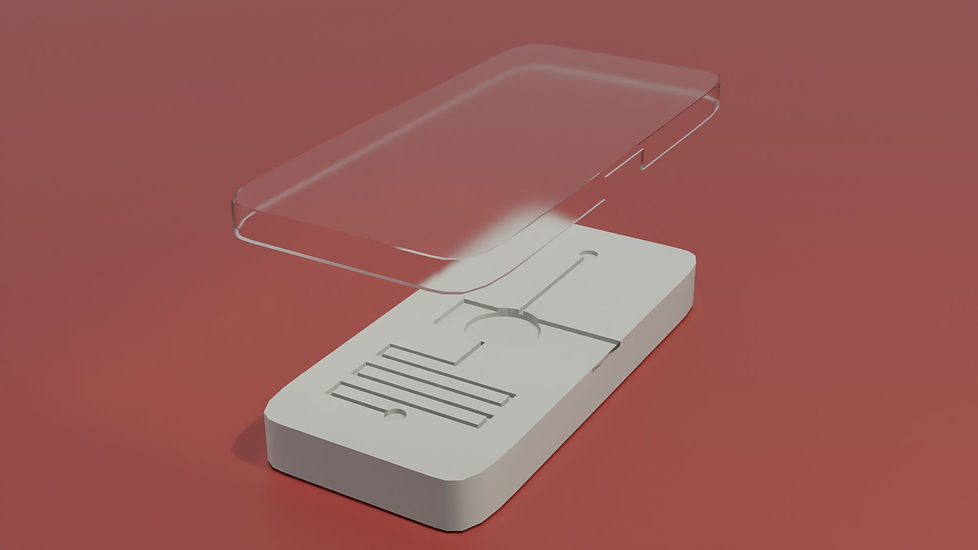
We hypothesised that a Screen-Printed Electrode (SPE) can achieve this by electrochemically quantifying accurate levels of dopamine in solution; ultimately this would extend to testing medium from a human brain organoid model. Several prototypes of a disposable, 3D-printed, amperometric device with microfluidic channels were developed and tested with dopamine solutions.